Monday, October 5, 2009

Opal gemstones jewelry opal pendants opal Shamanic talisman opal gems stones opals gemstones cabs cabochons Australian opal custom cut designer opal jewelry stones opal healing meditation Australian Lambina Opal Lighting Ridge Opal Yowah Nut Opals Andamooka opal matrix opal Mintabie Boulder Airport Seven 7 Water Holes jelly Fire Honduran opa


Opal designer opal gems stones opals gemstones cabs cabochons Australian opal custom cut designer opal jewelry stones Shamanic opal healing meditation Australian Lambina Opal Lighting Ridge Opal Yowah Nut Opals Andamooka opal matrix opal Mintabie Boulder Airport Seven 7 Water Holes jelly Fire Honduran opa

collected, designed, cut & polished by Mystic Merchant
Revealing The Gift of Spirit In Every Stone
the pleasure and satifaction of a lifetime awaits you
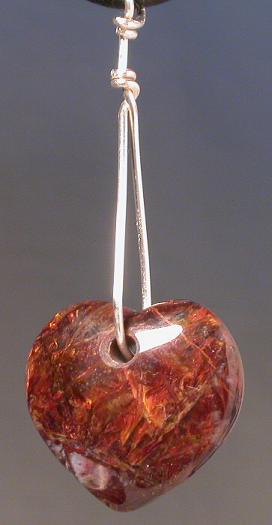
Pietersite jewelry talisman pendant earrings custom Pietersite jewelry and gems stones designer pietersite gemstones custom Shamanic talisman amulets jewelry pendant stones tools Pietersite cabs cabochons Eagles Eye chatoyant red yellow Africa Namibia Zimbabwe Chinese blue tiger eye hand made
View 2
View 3
View 4


Pietersite heart talisman pendant
Shamanic heart 5th chakra energizer
sweetest energies
lovely and soft healing
sterling silver bail adjustable leather necklace included
20 x 20 x 5 mm (stone alone)
item # pieterhearttalis-1

Handmade New Jewelry pendant pendants earrings Atelier Jewelry One of a kind, hand fabricated & custom Jewelry, Jewellery, Joaillerie handmade gemstone pendants, earrings, jewelry, carved, gems stones by Billy Mason unique gold and silver Jewelry gem stone jewelry including Cuff Bracelets Rings Earrings Cuff links cufflinks pendants jeweler Handmade Jewelry custom gemstone cutting 14k 18k jewelry 22k jeweler Handmade Jewelry Handmade Jewelry

Talisman pendants new jewelry gems stones New Jewelry Gallery Shamanic talisman amulets by Billy Mason unique gold and silver Jewelry gem stone jewelry including Cuff Bracelets Rings Earrings Cuff links cufflinks pendants jeweler Amulets Handmade Jewelry Handmade colored stones, precious, semi-precious, gold, silver, platinum,one of a kind sugilite pertified palm root tiger iron danburite, amethyst, ruby

one of a kind designs hand fabricated eclectic reflections of who you are and the journey you are on... original designs hand made by Mystic Merchant.

Perfect gifts for one of a kind friends.
The pleasure and satisfaction of a lifetime awaits you...

Tuesday, September 8, 2009

Welcome to Natural Stone Jewelry & Unique Gifts from KVK Designs


ECO-ARTISTIC WOODEN JEWELRY

Our Eco Artistic Wooden Jewelry offers a superb collection of exclusive handmade, eco-friendly, natural and colorful wooden jewelry, which stands out in not only in terms of quality and warmth, but uniqueness.

AU NATURAL
Natural Stone jewelry is no longer just for the hippie at heart, it is adorning the necks, fingers and ears of all of the chic celebs, as well as the designer runways. Agate, quartz, crystal and other raw-cut rocks and gems can be worn to update any outfit with natural style. KVK Designs offers unique handcrafted Natural Stone Jewelry that is stylish, unique and combines the best of Semi precious Stone Jewelry with awe-inspiring designs that capture your own unique personality.

Natural stones found in our jewelry vary in color, and subtle patterning, stripes or color combinations are naturally formed. Most natural stones found in our jewelry will include markings, inclusions or other patterning and every one will be unique.

Our Amber Collection is wonderfully stylish and unique. Some of our Amber jewelry is from the Baltic Sea area which is called Baltic Amber. Gemstones in our lovely bracelets have rich natural colors and a multitude of shapes and sizes. Our Gemstone Bracelets are a dazzling work of art. Our Stone Necklaces offer an array of designs; choose from Semi-precious and Gemstone Necklaces. Our Gemstone Earrings in designs that are incredibly original. Our Hematite Jewelry and Hematite Rings are known for their healing properties. All of our Hematite Jewelry is 100% Hematite and not Synthetic. Hematite is a lustrous, opaque, blue-black to silvery gray mineral. Hematite is iron ore.

We also carry Sterling Silver Jewelry stamped .925 for silver content. Our Wooden Jewelry by LoeweStamm is made from natural wood grown on the Black Sea Coast. Our Wooden Prayer Beads & Wrist Malas have physical, metaphysical and psychological effects on their users. Our Eco-Artistic Wooden Necklaces, Bracelets and Belts are natural and colorful works of art. Beautiful Sea Shell Bracelets are handcrafted from natural sea shells. Gorgeous Hand Blown Glass Pendants handcrafted from dichroic glass by "Annie Destito". Our Eco-friendly necklaces, bracelets and earrings handmade with recycled magazines or our eco-friendly soapnut soapberry and tagua nut spiral jewelry right on trend with the latest green fashions. Funky Glass Rings and Necklaces handcrafted with retro art paper by "The Overloaded Noggin". Our Bohemian Chic Cuff Bracelets and Leather Bracelets always have a place with your Vintage Bohemian ensemble. Fabulous Jewelry Boxes create a beautiful home for your precious gems and Unique Gifts that are sensible as well as sensational. We have something to meet every taste and style. “Sumptuous colors in beautiful designs".

We want each item that you find on our web site to be that certain something special that makes shopping with us a wondrous journey. Thank you for letting us share the beauty of nature with you.

We are always working to add new and trendy pieces to our site, so check back often.

Thursday, August 27, 2009

Introduction
The art & craft of fine quality jewellery manufacturing are deeply rooted in the traditional heritage and history of Pakistan. It was however in the Mughal period that the artisan class of goldsmiths arose to attain a distinct status in the subcontinent. The most famous among the various jewellery types that emerged during the times of the Mughals include, Minakari, Kundan, Polki, and Nauratan, etc. Presently, metropolitan cities of Lahore and Karachi are the major hubs of jewellery manufacturing. There are more than thirty major cities and nearly three hundred smaller cities/mandi towns where jewellery manufacturing and trading clusters cater to domestic demand. In addition, there are at least 45,000 villages where jewellers operate as single-shop, manufacturing and selling units to meet the demand of rural population.

Pakistan is a country with a population of more than 150 million people and a rich tradition of craftsmanship in jewellery manufacturing. Skilled/semi-skilled labour force is available at relatively lower rates, which offers a comparative advantage to the country. Their skill enhancement through training would lead to greater competitiveness.

Currently, Pakistan imports more than one hundred and twenty tones of gold per annum, which makes it the eighth largest consumer of gold in the world. In the year 2002, Pakistan exported gems & jewellery worth US$32 million (which went down to US$28.2 million in 2003). Although, the volume of exports of gems & jewellery from Pakistan is of no great significance in the total global trade of US$84.4 billion and much lower than India, which is our biggest regional competitor, but the growth potential of exports in the sector is huge.

Pakistan’s Gems & Jewellery Exports for 2003 (US$ million)

WorldIndiaPakistan
Jewellery27,900 2,175 24.5
Gems56,500 8,414 3.7
Total84,400 10,589 28.2

Source: UNSTAT

Pakistan has been gifted with abundant resources of several precious and semi-precious gemstones, at present mostly found in Northern Areas and NWFP, but with a huge future potential in Balochistan. Most important of the currently found stones are emeralds of Mingora (Swat), pink and golden topaz of Katlang (Mardan) and aquamarine of Chitral and Neelam Valley. At present, there is no formal survey available to identify the geological resources of gemstones in the country. Furthermore, due to lack of realization of its importance as an industry, those who are engaged in the mining, cutting/polishing and trading of gemstones in Pakistan have not been able to exploit the full potential of this sector.

The first gemstone mine in Pakistan was discovered in 1951, in the Haramosh Range in Gilgit. But it took no less than 27 years for the establishment of Gemstones Corporation of Pakistan (GEMCP), under the administrative control of Ministry of Petroleum & Natural Resources, in 1978. GEMCP was responsible for exploring, mining, auctioning and exports of gemstones. Within 15 years of its establishment, GEMCP was disbanded in 1993-94 and private sector was encouraged to invest in the sector. The impact of privatization proved to be positive, as exports of gemstones have risen since then, albeit slightly. In 2003, the total value of gemstones export was worth US$4 million. Factors including lack of appropriate skills, vested interest, regulatory bottlenecks, technological limitation and so forth, have been responsible for hindering the efforts of new investors to make any significant progress in this regard.

Gems & Jewellery Sector Strategy

The strategy is a combined effort of Gems & Jewellery Industry's stake holders, SMEDA (MOIP&SI) and J.E Austin Inc (USAID). It is for the first time that a working Strategy from mine-to-market has been developed and is based on first hand information from the different stakeholders rather than relying on the secondary data available. The methodology applied was studying the value chain analysis and recommending solutions to the problems and designing possible pilot projects for immediate implementation.

The main strategic initiatives of the Gems & Jewellery Strategy cover the following areas of intervention in the value chain:

  • Recommendations for Geological Survey of the Balochistan and NWFP.
  • Introduction of Modern Technology and Methods of Mining.
  • Establishment of Gems Trading House/Bureau at Karachi, Peshawar and Quetta.
  • Establishment of Cutting Centres in Peshawar, Karachi and Lahore.
  • Developing Training Facilities in the Cutting, Gemmology, Designing and Manufacturing.
  • Quality Control - Hallmarking and Assaying Facilities as well as Gem labs for Certification.
  • Marketing and Branding Initiatives, i.e., domestic market trend surveys,
  • Website development, policy/regulatory changes to improve enabling environment for exports, seminars and Exhibitions.
  • Development of Infrastructure i.e. logistics, financial, services, insurance and MIS system.

The success of this strategy would depend on immediate implementation of all its recommendations at all points of the value chain. This will require a SWOG coordinated collective effort by all ministries and stakeholders involved. The SWOG is confident that within the next 5 years the Pakistan Gems & Jewellery Industry can achieve a quantum leap in export earnings and also provide employment opportunities that will assist in poverty alleviation.

Following is the list of the private/public sector entities among which effective coordination is crucial for them to play a key role in the development of the Gems & Jewellery sector:

  • APGMJA/APCEA.
  • GGIP.
  • AKRSP.
  • NAGMA & BGA.
  • EPB (Ministry of Commerce & Trade).
  • SMEDA (Ministry of Industries, Production & Special Initiatives).
  • Ministry of Petroleum & Natural Resources.
  • PCSIR (Ministry of Science & Technology).
  • Geological Survey of Pakistan.
  • HR Training Institutes: PSFD, BNU, GGIP, Provincial Vocational Training Institutes, etc
  • Proposed Pilot Projects

    1. Geological Survey & Mining:

    a. Geological Survey of NWFP, Balochistan and Northern Areas.

    • Identification of new deposits and scientific quantification of existing ones.
    • Support needed from Geological Survey of Pakistan to undertake required
      surveys.

    b. Small Scale Mining Promotion Strategy

    • Support needed from Ministry of Petroleum and Natural Resources; update needed of earlier SMEDA strategy.

    2. Common Facility Training & Manufacturing Centres:

    • Establish high-tech jewellery manufacturing & training centres in the main hubs, to upgrade quality and enhance productivity.
    • Consultant Hired to work on detailed feasibility study.

    3. Gemmology/Design & Training Institutes:

    • AIGS has offered to establish full-fledged gemmology and jewellery CAD training institute with local collaboration.
    • GIA (Thailand) to offer Extension Classes:

    • Gem Identification (5 days)
    • Diamond Grading (5 days)
    • Coloured Stone Grading (3 days)

    4. Gems Exchange / Trading Bureau:

    • Various models have been studied for setting up this facility in Peshawar, Karachi and Quetta.
    • Estimated cost per unit is US$ 300,000 including infrastructure and equipment.
    • Additional required funding, if required, for both exchanges will be sought from GoP, the banking sector, and other financial sources.

    5. Assaying & Hallmarking Facilities:

    • Establishment of Hallmarking facility within 12 months.
    • Gems and Jewellery SWOG to form Hallmarking Committee - a public private partnership including EPB, PNAC, PSQCA, PCSIR, TUSDEC, SMEDA, and Private Sector Stakeholders.
    • In the first phase, need to establish Assaying and PCSIR is establishing model Jewellery Common Facility and Assaying & Hallmarking facility in Lahore to extend its services to assist the private sector in creating these facilities.

    6. Gem Certification Labs:

    • Report of Mr. Stephen Kennedy, consultant hired by EPB.
    • Establish model gem labs in, Peshawar, Quetta and Karachi to extend its services to assist the private sector in creating these facilities.
    • Request GSP to situate Gem Testing lab in Peshawar or Quetta, instead of the planned venue of Islamabad.

    7. Branding/Marketing:

    • To establish Pakistan's gem and jewellery companies as world-class jewellery supplier.
    • Branding Sub-Strategy:
      • Re-position Pakistan initially as low volume, high value, competitively priced supplier.
      • Develop linkages with internationally known institutions (GIA,GIT) and associations (ICA, CIBJO) to transfer their reputation power onto the Pakistan value proposition.
      • PAKISTAN-THE BRAND: Umbrella country campaign at International Trade Shows to build awareness about Pakistan�s Gems & Jewellery industry.
      • Develop training, quality assurances (hallmarking, certification) and international market knowledge to develop higher margin market opportunities in local and international markets.
      • Domestic Market Surveys.
      • Pakistan Gems & Jewellery Introductory Brochure (in progress).
      • Detailed Documentary about Gems & Jewellery Pakistan.
      • Pakistan Gems & Jewellery Website (in progress).

    Measures for a Conducive Business Environment

    1. Review of Taxation Structure to Remove Trade Barriers and Encourage New Investment, i.e., industry be given zero rated status.
    2. Import and selling of gold through banks.
    3. Policy for import/export of jewellery manufactured from metals other than gold.
    4. Entitlement against sales made on foreign credit cards.
    5. Improvements in Secure Transportation Logistics through engaging international companies such as Securicor, Brinks, etc. and PIA.
    6. Special Lending Schemes and Funding for Introduction of Technology Intensive Designing/Manufacturing.

    Tuesday, August 4, 2009

    Diamond: not necessarily colourless


    Diamond: not necessarily colourless

    It really is not our job here at the International Colored Gemstone Association to tell you all about diamonds. However, diamond is the modern birthstone for April, so we would like to take this opportunity to say a few words about fancy coloured diamonds, which are more to our taste than the colourless type: they're rarer, more valuable, and a great deal more colourful (although the colours do tend to be a little on the pale side).

    Fancy coloured diamonds are not a mass-market product such as those which are advertised everywhere and sold by numbers. They have more personality than that. Fancy coloured diamonds are almost as much fun as coloured gemstones! Like coloured gemstones, each one is different. They come in fabulously expensive pale pinks and blues, pale to bright yellows, oranges, greens, and all those brown colours that are now given names like cognac and champagne. So, buy a diamond instead of a coloured gemstone if you must, but at least consider a fancy coloured one which will give your jewellery more character, more individuality and more colour!

    Garnet gemstone


    Garnet

    Aren't garnets those wonderful deep-red gemstones you often find in antique jewellery? Well yes, to a certain extent, a deep, warm red indeed being the colour most frequently found in garnets. Sadly, however, far too few people are aware that the world of the garnets is far more colourful than that. Spectacular finds, especially in Africa, have enhanced the traditional image of the garnet with a surprising number of hues - even if red does continue to be its principal colour. Thanks to their rich colour spectrum, garnets today can quite happily keep pace with changes of style and the colour trends of fashion. And thanks to the new finds, there is a reliable supply of them too. So in fact this gemstone group in particular is one which gives new impetus to the world of jewellery today.

    By the term 'garnet', the specialist understands a group of more than ten different gemstones of similar chemical composition. It is true to say that red is the colour most often encountered, but the garnet also exists in various shades of green, a tender to intense yellow, a fiery orange and some fine earth-coloured nuances. The only colour it cannot offer is blue. Garnets are much sought-after and much worked gemstones - the more so because today it is not only the classical gemstone colours red and green which are so highly esteemed, but also the fine hues in between. Furthermore, the world of the garnets is also rich in rarities such as star garnets and stones whose colour changes depending on whether they are seen in daylight or artificial light.

    And what else is there that distinguishes this gemstone group from the others? Well, first of all there is its good hardness of 7 to 7.5 on the Mohs scale. With a few minor exceptions it applies to all the members of the garnet group, and it is the reason for the excellent wearing qualities of these gemstones. Garnets are relatively insensitive and uncomplicated to work with. The only thing they really don't like is being knocked about or subjected to improper heat treatment. A further plus is their high refractive index, the cause of the garnet's great brilliance. The shape of the raw crystals is also interesting. Garnet means something like 'the grainy one', coming from the Latin 'granum', for grain. This makes reference not only to the typical roundish shape of the crystals, but also to the colour of the red garnet, which often puts one in mind of the seeds of a ripe pomegranate. In the Middle Ages, the red garnet was also called the 'carbuncle stone'. And even today, fantasy names like Arizona ruby, Arizona spinel, Montana ruby or New Mexico ruby are still rife in the trade.


    The warm red of the garnet illuminated Noah's Ark

    Garnets have been known to Man for thousands of years. Noah, it is said, used a garnet lantern to help him steer his ark through the dark night. Garnets are also found in jewellery from early Egyptian, Greek and Roman times. Many an early explorer and traveller liked to carry a garnet with him, for the garnet was popular as a talisman and protective stone, as it was believed to light up the night and protect its bearer from evil and disaster. Today, science has taught us that the garnet's proverbial luminosity comes from its high refractive index.

    Not only do garnets have many colours; they also have many names: almandine, andradite,demantoid, grossularite, hessonite, pyrope, rhodolite, tsavorite, spessartine, and uvarovite, to quote but a few. But let us restrict ourselves to the most important and begin with the red garnets. First, there is the fiery red pyrope. Its spirited red, often with a slight brownish nuance, was a gemstone colour much in demand in the 18th and 19th centuries. Garnets from a find in the north-eastern part of the former kingdom of Bohemia - small stones of a wonderful hue - were world-famous at that time. In Europe, they were worked into jewellery a good deal, especially in the Victorian period. That genuine Bohemian garnet jewellery was traditionally set with a large number of small stones, which were close to one another like the seeds of a pomegranate, with their red sparkle. And today too, garnets are still found in former Czechoslovakia and set close together according to the old tradition, the attractiveness of classical garnet jewellery thus consisting mainly in the beauty of the gemstones.

    The larger central stones of the typical 'rosettes' are also mostly of garnet, though they belong to a different category. For the 'almandines', named after Alabanda, an ancient city, have a chemical composition that differs somewhat from that of the pyrope. And why, one might ask, are they used as central stones? That's quite simple: because Nature has created the pyrope almost exclusively in small sizes, whilst allowing the almandine to grow in rather larger crystals.

    A further garnet variety, also red, is the rhodolite. a mixed crystal of almandine and pyrope. This popular garnet is of a magnificent velvety red with a fine violet or raspberry-red undertone. Originally found in the USA, it now comes mainly from the gemstone mines in East Africa, India and Sri Lanka.

    The colourful world of the garnets

    The specialist world was amazed a few years ago by the fantastic find of a type of garnet which had been very scarce until then. At the Kunene River, on the border between Namibia and Angola, a deposit of radiant orange to red 'spessartites' was discovered. The spessartite was originally named after the site of a find made in Germany. Spessartites had led a quiet, shadowy existence as stones for gemstone lovers and collectors until that momentous discovery in Namibia. There were hardly any used in jewellery because they were so very rare. But this new find changed the gemstone world. Since then, its wealth has increased by the addition of this unusually fine, intensely radiant orange-red gemstone. Under the trade name 'mandarine-garnet', this wonderfully orange noble garnet became world-famous in no time at all. Unfortunately, the mine in the quiet hills of Namibia was only able to be exploited for a few years. The search for gemstones in the remote bush country began to involve too much effort and became too expensive. So fears grew that this highly precious gemstone, which had shot into the firmament of the gemmological world like a rocket, might only become available in rare individual cases from the stocks of a few cutting-centres. That is, until another deposit of the orange treasures was discovered, this time in Nigeria. Their colour and brilliance are so similar to those of the mandarin garnets from Namibia that only an experienced specialist can discern the subtle differences.

    Now for the green garnets. Green garnets?! Is there really such a thing? Indeed there is! In fact, several green varieties are known. First there is 'grossularite', created by Nature in many fine tones of yellow, green and brown and esteemed for its many fine interim hues and earth colours. Here too, there was a spectacular find: in the final year of the 20th century, extensive grossularite deposits were discovered in Mali. These Mali garnets captivate us with their great brilliance. Even the brown, which is otherwise not terribly popular, seems vivid and natural, and goes particularly well with ethnologically inspired trends.

    Probably the best known green garnet is the tsavorite or tsavolite, which also belongs to the grossularite group. Tiffany's in New York gave this name to the previous emerald-green stone which was discovered in 1967 by a British geologist, Campbell R. Bridges, in the north-east of Tanzania - after the place where the discovery was made, near the Tsavo National Park with its wealth of game. The green of the tsavorite runs from vivid and light to deep and velvety and, like all garnets, it has particularly good brilliance.

    The star of green garnets is the rare
    demantoid, a gemstone for connoisseurs and gemstone lovers. Its brilliance is positively tremendous, even greater than that of the diamond. Russia's star jeweller Carl Fabergé loved the brilliant green garnet from the Urals more than anything else, and used it in his creations. Meanwhile, the demantoid is no longer quite as scarce in the gemstone trade, thanks to some new finds in Namibia. Demantoids from Namibia are of good colour and brilliance, but they lack one tiny feature: the so-called 'horse-tail inclusions'. These fine, bushy inclusions are the unmistakable, typical feature by which a Russian demantoid is recognised.

    Gemstones for every fashion trend

    Anyone who loves what is pure and natural and the warm, sun-bathed colours of late summer will be fired with enthusiasm by the colour spectrum of the garnet. Today, garnets mostly come from African countries, but also from India, Russia and Central and South America. The skilled hands of cutters the world over work them into many classical shapes, but also increasingly into modern, imaginative designer cuts. Garnets remain convincing with their natural, unadulterated beauty, the variety of their colours and their tremendous brilliance. Anyone acquiring garnet jewellery can be assured that the joy he or she derives from this beautiful gemstone gift from Nature will be long-lasting and undimmed.

    Ametrine: spinning purple into gold


    Ametrine: spinning purple into gold

    Do you love both the purple of amethyst and the sunny gold of citrine? Are you an avid Minnesota Vikings fan? I have the perfect gem for you! Sometimes amethyst and citrine colours are found in the same crystal of quartz. These bicolour yellow and purple quartz gemstones are called ametrine.

    With ametrine, you can have both gem colours for the price of one! Ametrine is especially inexpensive when you consider that it comes from only one mine in the world.

    The Anahi Mine in Bolivia is the major world producer of ametrine. The mine first became famous in the seventeenth century when a Spanish conquistador received it as a dowry on marrying a princess named Anahi from the Ayoreos tribe. Ametrine was introduced to Europe through the conquistador's gifts to the Spanish queen.

    Ametrine is most typically faceted in a rectangular shape with a 50/50 pairing of amethyst and citrine. Sometimes a checkerboard pattern of facets is added to the top to increase light reflection. Ametrine can also be cut to blend the two colours so that the result is a mixture of yellow, purple, and peach tones throughout the stone. Ametrine is also popular among artistic cutters and carvers, who play with the colours, creating landscapes in the stone.

    Ametrine is a very durable gemstone suited to a variety of jewellery uses. Most sizes and shapes are available but the colour contrast is most pronounced in sizes of over seven carats.

    So why compromise, when you can have two varieties of quartz for the price of one?

    Citrine gemstone


    Citrine

    Let's suppose that someone has bought a moped, yet his friends and acquaintances keep talking about his 'wonderful racing machine'. He surely feels confused, or feels that they are taking the mickey out of him. A moped was exactly what he wanted for short trips in good weather, but even the salesman said that he was now in possession of a 'real flyer'.

    That's roughly how things go with the citrine, the stone for the month of November. Many people have come to know and love this stone under the name gold topaz, or Madeira or Spanish topaz, although in actual fact it has very little in common with the higher-quality gemstone topaz - except for a few nuances of colour. Thus the history of the citrine is closely interwoven with that of the topaz, and coincides with it completely when it comes to the interpretation of alleged miraculous powers. However, the citrine is a member of the large quartz family, a family which, with its multitude of colours and very various structures, offers gemstone lovers almost everything their hearts desire in terms of adornment and decoration, from absolutely clear rock crystal to black onyx. And it does so at prices which are by no means unaffordable.

    The name is derived from the colour - the yellow of the lemon - , although the most sought-after stones have a clear, radiant yellowish to brownish red. Like all crystal quartzes, the citrine has a hardness of 7 on the Mohs scale and is thus, to a large extent, insensitive to scratches. It won't immediately take offence at being knocked about either, since its cleavage properties are non-existent. Even if their refractive index is relatively low, the yellow stones have just that mellow, warm tone that seems to have captured the last glow of autumn. Like golden Rhine wine or sparkling Madeira, heavy and sweet, citrine jewellery shimmers and brings a hint of sunshine to those dull November days.

    There are not many yellow gemstones in the world of jewels. A diamond or a sapphire may be yellow - those will be expensive -, or sometimes a tourmaline or chrysoberyl, though these tend toward green somewhat, a golden beryl or eben a pure topaz, which we will mention again later on. However, the citrine fulfils everyone's colour wishes, from lemon yellow to reddish brown.

    Rare though it is, yellow does in fact occur in quartz in Nature, if seldom, when there are traces of iron in the silicon dioxide. Historically, it has been found in Spain, on the Scottish island of Arran, in France, Hungary and in several mines overseas. Perhaps the citrine wouldn't have been talked about any more at all if, in the middle of the 18th century, it had not been for the discovery that amethysts and smoky quartzes can also be rendered yellow by so-called burning. This heat treatment at temperatures of between 470 and 560 degrees has to be carried out very carefully and requires a great deal of experience. However, in the course of 200 years, its application has become so much a matter of course that most of the stones available in the trade today are in fact burnt amethysts or smoky quartzes. Only a trained specialist can recognise the signs of heat treatment at all, burnt stones having subtle stripes whilst the yellow of natural ones is cloudy.

    In Europe, the boom on these yellow to reddish crystal quartzes didn't begin until, in the 1930s, expatriate agate cutters from Idar-Oberstein sent large quantities of citrine back home, along with amethyst and agate, from Brazil and Uruguay. Thus the golden-yellow quartzes made a contribution to Idar-Oberstein's becoming - and remaining - one of the world's great gemstone centres. Just as they had been used to doing with agate and other kinds of quartz, the cutters faceted the citrine using large, rotating sandstones over decades. The raw stone was actually held in the cutter's hand during this process. If you give that a little thought, it will occur to you just how skilled the cutters from the Hunsrück really were.

    The supply of Europe with sufficient raw material came just at the right moment for the nascent upheaval in social conditions. As the bourgeoisie grew in strength, the demand for jewellery across a broader spectrum of social strata also grew, and the citrine found a permanent niche for itself. Since until then it was really only the topaz which was known and used as a gold-coloured gemstone, the yellow and brown crystal quartzes quickly became very popular among the ladies, being known as gold topaz or smoky topaz, or by the double-barrelled names that proclaimed their origin. However, they were also found in step and table cuts as cuff-links and rings in the evening wardrobe of fine gentlemen. At the beginning, perhaps, the notion "it's all on the surface" may have played a part. But there was no other stone to which the wrong name clung as doggedly as the citrine. Even now, jewellery enthusiasts with no specialist knowledge may be astounded when you tell them that their 'gold topaz' is a citrine, in other words not a topaz at all, but quartz.

    So what is it that constitutes the difference between the real topaz and the citrine? A fluorine aluminium silicate in chemical terms, the topaz is considerably harder and heavier than quartz, and it has a higher refractive index, which endows it with more fire when the colour is good. It does have one weakness: its good cleavage qualities, which must be taken into account when it is being worked on. It can be found in all the colours of the rainbow and has been known to Man for at least 2000 years. It has not been proved beyond doubt whether the name comes from Sanskrit or Greek, though the Greek name 'topazos' means 'green gemstone'. The Romans dedicated the topaz to Jupiter.

    The colour in which the topaz is most commonly found is yellow, and that is the colour in which it occurs in one of the major German gemstone rocks, the Schneckenstein (a topaz-bearing rock said to resemble a snail) in Saxony. In the 18th century, it was mined there during a period of over 60 years. However, most of the crystals were hardly a centimetre in diameter. You had to go to Siberia or Brazil to find crystals as large as your fist. Having said that, anyone who is interested can convince himself of the beauty of cut specimens in the topaz set in Dresden's Grünes Gewölbe (Green Vault). The enormous and magnificent topaz from the Portuguese crown, the Braganza, was for a long time thought to be a diamond.

    In mysticism, the topaz is attributed with a cooling, styptic and appetising effect. It is said to dispel sadness, anger and nocturnal fears, to warn its wearer of poisons and protect him or her from sudden death. It is reputed to make men handsome and intelligent and sterile women fertile and happy. However, it is probably better not to rely too much on its magical powers, since it was also claimed that you could immerse your hand in boiling water after a topaz had been thrown into it and retract it again unharmed!

    In the Empire style, the topaz was still widespread, but then the more reasonably priced citrine took over from it and even usurped its name. Since then, the topaz has been a rather exotic figure in the jewellery trade, and has been given the additional predicate 'pure' to make it clear that the topaz, not the quartz topaz, is meant. And it is still waiting for its comeback to this day.

    Tanzanite gemstone


    Tanzanite

    Tanzanite is an extraordinary gemstone. It occurs in only one place worldwide. Its blue, surrounded by a fine hint of purple, is a wonderful colour. Thanks to its unusual aura and the help of the New York jeweller's Tiffany, it has rapidly become one of the most coveted gemstones in the world.

    It is named after the East African state of Tanzania, the only place in the world where it has been found. Africa? Does anyone think of gemstones when they hear that name? Well they should, because Africa is a continent which provides the world with a multitude of truly magnificent gemstones, like tanzanite for example. On its discovery in 1967, it was enthusiastically celebrated by the specialists as the 'gemstone of the 20th century'. They held their breath in excitement as they caught sight of the first deep-blue crystals which had been found in the Merelani Hills near Arusha in the north of Tanzania. Millions of years ago, metamorphic schists, gneisses and quartzites formed impressive, flat-topped inselbergs on a vast plain in the shadow of Kilimanjaro. The precious crystals grew in deposits on the inside of these unusual elevations. For a long, long time they were hidden from the eye of Man, until one day some passing Masai shepherds noticed some sparkling crystals lying in the sun and took them along with them.

    In Merelani today, the search is carried on for the coveted crystals in several, smallish mines, in some cases using modern methods. As a rule, only small grains are found, but now and again the mineworkers succeed in fetching out a larger crystal – to the joy of the mine owners and that of the large number of tanzanite fans.

    The tanzanite trade is in the hands of many licensed merchants, mostly on a small scale, who have, over the decades, built up stable, trusting business relationships with gemstone companies in India, Germany, Israel and the USA. An estimated 90 per cent of all tanzanite merchants are official members of the International Colored Gemstone Association ICA, and are thus bound by the high ethical standards of that organisation. In this way, this exclusive gemstone is not subject to trade via dubious channels, but instead, in spite of its rarity, passed on along reputable trade routes to established cutting-centres and subsequently to major jewellers all round the world.

    Really just a blue zoisite ...

    Tanzanite is a blue variety of the gemstone zoisite. It consists of calcium aluminium silicate and is not particularly hard, having a value of 6.5 to 7 on the Mohs scale. For that reason, it should always be worn carefully and never placed in an ultrasonic bath for cleaning or brought into contact with acids.

    When the first tanzanites were offered to the New York jewellery company Tiffany a short time after their discovery, they sparked an enthusiastic reaction. 'This gemstone is a sensation!', they said. However, they did make a recommendation to give the 'child' another name, since the gemmologically correct name 'blue zoisite' was felt to be too close to the English word 'suicide'. So Tiffany's proposed the name 'tanzanite', after the place where the stone had been found - a name which quickly came into general use in the trade. And it was Tiffany's who, two years after its discovery, presented the exclusive gemstone to the general public with a broad-based advertising campaign.

    ... but what a fantastic colour!

    The deep blue of the tanzanite is fantastic, and runs from ultramarine blue to light violet-blue. The most coveted colour is a blue surrounded by a delicate hint of purple, which has a particularly wonderful effect in sizes of over 10 carats. The well developed polychromaticity of the tanzanite is typical: depending on the angle from which you look at it, the stone may appear blue, purple or brownish-yellow. Having said that, most raw crystals are somewhat spoiled by a brownish-yellow component, though it can be made to disappear by the cutter if he heats the stone carefully in an oven to approximately 500°. During the procedure he must pay careful attention to the moment at which the colour turns to blue. This burning is a method of treatment which is regarded as customary in the trade, but the raw stones must be as free of inclusions as possible, since otherwise fissures may occur. In fact working with tanzanite can sometimes give even the most experienced cutter a bit of a headache, the cleavage of this gemstone being very pronounced in one direction. This exclusive gemstone is cut in every imaginable shape from the classical round shape to a number of imaginative designer cuts.

    A tanzanite will continue to fascinate with its unusual, captivating aura. Its deep blue with the slightly purple tinge is one of the most extravagant colours known to Man. It personifies immaculate, yet unconventional elegance. A person who acquires one of these exclusive gems is someone who wishes to set himself apart from the hoi polloi. A person who wears it exudes confidence and individuality. The almost magical colour of a perfectly cut tanzanite is one that not only suits confident young women; it is also excellently suited to underlining the individuality of the more mature woman.

    In the meantime, almost any price you care to name is being asked - and paid! - for tanzanites of good quality and large size. What makes this stone so popular? Is it simply that fantastic colour? No, it is also the exclusivity of its origin. The stone is particularly highly prized because it is found in only one place in the whole world. The idea of possessing something that not everyone has has always been one of the main criteria in the way we esteem special gems.

    Aquamarine gemstone


    Aquamarine

    From the light blue of the sky to the deep blue of the sea, aquamarines shine over an extraordinarily beautiful range of mainly light blue colours. Aquamarine is a fascinatingly beautiful . Women the world over love it for its fine blue shades which can complement almost any skin or eye colour, and creative gemstone designers are inspired by it as they are by hardly any other gem, which enables them to create new artistic cuts again and again.

    Its light blue arouses feelings of sympathy, trust, harmony and friendship. Good feelings. Feelings which are based on mutuality and which prove their worth in lasting relationships. The blue of aquamarine is a divine, eternal colour, because it is the colour of the sky. However, aquamarine blue is also the colour of water with its life-giving force. And aquamarine really does seem to have captured the lucid blue of the oceans. No wonder, when you consider that according to the saga it originated in the treasure chest of fabulous mermaids, and has, since ancient times, been regarded as the sailors' lucky stone. Its name is derived from the Latin 'aqua' (water) and 'mare' (sea). It is said that its strengths are developed to their best advantage when it is placed in water which is bathed in sunlight. However, it is surely better still to wear aquamarine, since according to the old traditions this promises a happy marriage and is said to bring the woman who wears it joy and wealth into the bargain. An ideal gem, not only for loving and married couples.

    A gemstone with many good qualities

    Aquamarine is one of our most popular and best-known gemstones, and distinguishes itself by many good qualities. It is almost as popular as the classics: ruby, sapphire and emerald. In fact it is related to the emerald, both belonging to the beryl family. The colour of aquamarine, however, is usually more even than that of the emerald. Much more often than its famous green cousin, aquamarine is almost entirely free of inclusions. Aquamarine has good hardness (7.5 to 8 on the Mohs scale) and a wonderful shine. That hardness makes it very tough and protects it to a large extent from scratches. Iron is the substance which gives aquamarine its colour, a colour which ranges from an almost indiscernible pale blue to a strong sea-blue. The more intense the colour of an aquamarine, the more value is put on it. Some aquamarines have a light, greenish shimmer; that too is a typical feature. However, it is a pure, clear blue that continues to epitomise the aquamarine, because it brings out so well the immaculate transparency and magnificent shine of this gemstone.

    'Santa Maria' sets pulses racing

    The bright blue of this noble beryl is making more and more friends. The various colour nuances of aquamarine have melodious names: the rare, intense blue aquamarines from the Santa Maria de Itabira mine in Brazil, which make every gemstone lover's heart beat faster, are called 'Santa Maria'. Similar nuances come from a few gemstone mines in Africa, particularly Mozambique. To help distinguish them from the Brazilian ones, these aquamarines have been given the name 'Santa Maria Africana'. The 'Espirito Santo' colour of aquamarines from the Brazilian state of that name is of a blue that is not quite so intense. Yet other qualities are embodied in the stones from Fortaleza and Marambaia. One beautiful aquamarine colour was named after the Brazilian beauty queen of 1954, and has the name 'Martha Rocha'.

    It can be seen from the names of aquamarine colours just how important Brazil is among the countries where aquamarine is found. Most of the raw crystals for the world market come from the gemstone mines of that large South American country. Every now and then, large aquamarine crystals of immaculate transparency are also found with a magnificent colour, a combination which is very unusual in gemstones. And very occasionally, sensationally large aquamarine crystals come to light in Brazil, such as the crystal of 110.5 Kg found in 1910 in Marambaia/Minas Gerais, or for example the 'Dom Pedro', weighing 26 Kg and cut in Idar-Oberstein in 1992 by the gemstone designer Bernd Munsteiner, the largest aquamarine ever to have been cut. However, aquamarines are also found in other countries, for example Nigeria, Zambia, Madagascar, Mozambique, Afghanistan and Pakistan.

    Favourite stone of modern designers

    There is hardly any other gemstone in modern jewellery design which is refined in such a variety of ways as aquamarine. Whether it is fashioned as a clear, transparent gem in the classical step cut, or creatively cut in a more modern design, it is always fascinatingly beautiful. Uncut too, or with many inclusions which can be brought into play by the designer in the way in which the stone is cut, it can be refined to produce the most beautiful creations. Designers call it their favourite gemstone. Again and again they take the world by surprise with a new, modern artistic cut, and when they are breaking new ground, aquamarine is a gem that they particularly like to work with. Without doubt, these creative designer cuts have contributed to the great popularity of this gem. The lucid colour of aquamarine makes it easy to see inclusions. For this reason, aquamarine should always be of the greatest possible transparency. On the other hand, particularly charming effects can sometimes be achieved in the way the gemstone is cut by bringing the inclusions into play. The light colour of aquamarine leaves the gemstone designer free to bring out the brilliance of the gem with fine grooves, notches, curves and edges. In this way, each aquamarine becomes a unique specimen, whose magical attraction no woman can resist.


    Peridot gemstone


    Peridot

    The vivid green of the peridot, with just a slight hint of gold, is the ideal gemstone colour to go with that light summer wardrobe. No wonder – since the peridot is the gemstone of the summer month of August.

    The peridot is a very old gemstone, and one which has become very popular again today. It is so ancient that it can be found in Egyptian jewellery from the early 2nd millennium B.C.. The stones used at that time came from a deposit on a small volcanic island in the Red Sea, some 45 miles off the Egyptian coast at Aswan, which was not rediscovered until about 1900 and has, meanwhile, been exhausted for quite some time. Having said that, the peridot is also a thoroughly modern gemstone, for it was not until a few years ago that peridot deposits were located in the Kashmir region; and the stones from those deposits, being of an incomparably beautiful colour and transparency, have succeeded in giving a good polish to the image of this beautiful gemstone, which had paled somewhat over the millennia.

    The ancient Romans too were fond of this gemstone and esteemed its radiant green shine, which does not change even in artificial light. For that reason they nicknamed it the 'emerald of the evening'. Peridot is also found in Europe in medieval churches, where it adorns many a treasure, for example one of the shrines in Cologne Cathedral. During the baroque period, the rich green gemstone once again enjoyed a brief heyday, and then it somehow faded into oblivion.

    Spectacular 'Kashmir peridots'

    But suddenly, in the middle of the 1990s, the peridot was the big sensation at gemstone fairs all round the world. The reason? In Pakistan, up on an inhospitable pass at some 4000 metres (13,120 ft.), a sensationally rich deposit of the finest peridots had been found. In tough climatic conditions which permitted the gemstones to be mined only during the summer months, the unusually large, fine crystals and fragments were brought down into the valley. These stones were finer than anything that had ever been seen before. And the deposits were so rich that the demand for peridots can, for the present, easily be satisfied.
    In order to emphasise the special quality of the peridots from Pakistan, these stones are offered as 'Kashmir peridots', following the famous Kashmir sapphires. Creative gemstone cutters have succeeded in cutting some fascinatingly beautiful one-off stones of more than 100 carats from some of the large, fine, clear crystals with their magnificent rich green!

    How green? It all depends on the iron

    This gemstone has no fewer than three names: 'peridot', 'chrysolite', from the Greek 'gold stone', and 'olivine', for the peridot is the gemstone form of the mineral olivine. In the gemstone trade it is called 'peridot', derived from the Greek word 'peridona', which means something like 'to give richness'.

    The peridot is one of the few gemstones which come in one colour only. The rich, green colour with the slight tinge of gold is caused by very fine traces of iron. From a chemical point of view, peridot is an iron magnesium silicate. The intensity of the colour depends on the amount of iron actually present. The colour itself can vary over all shades of yellowish green and olive, and even to a brownish green. Peridot is not particularly hard - only 6.5 to 7 on the Mohs scale - but it is easy to look after and fairly robust. Peridot cat's eyes and star peridot are particularly rare and precious.

    The most beautiful stones come from the border area between Pakistan and Afghanistan. However, the peridot as a gemstone also exists in Myanmar, China, the USA, Africa and Australia. Stones from East Burma, now known as Myanmar, have a vivid light green and fine inclusions with a silky shine to them. Peridot from Arizona, where it is popularly used in native American jewellery, often has somewhat yellowish or gold-brown nuances.

    Uncomplicated, but not for the cutter

    The peridot is cut in accordance with its crystal shape, mostly faceted or in classical table cuts, or round, antique, as an octahedron or oval. Smaller crystals are cut into standardised series stones, larger ones into imaginative one-offs. Cabochons are made if the material contains more inclusions, for the domed cut brings out the fine silky shine of the inclusions to their best.

    The cutters know full well that this gemstone is anything but easy to work with. The raw crystals can be very tricky and may crack easily. There is often a good deal of tension on the inside of the crystal. But once the cutter has succeeded in removing the coarser inclusions, the peridot is a precious stone with good wearing qualities which does not call for any special care.

    An ideal summer stone

    The peridot adds a wonderful variant to the colour spectrum of green gemstones. Increasingly, it is processed not only to one-offs, but also for use in series jewellery. And since the world of fashion is just in the process of rediscovering its love for the colour green, the popularity of this rich green gemstone is also very much on the up.

    Thanks to the rich finds in Pakistan and Afghanistan, there is enough raw material on the market, so the 'right stone' can now be found to cater for each individual taste and each pocket. Large, transparent stones of an intense colour are, however, rare and correspondingly expensive. The peridot is a gemstone that you should definitely get to know better. Its fine pistachio to olive green is the perfect complement to a fresh

    Topaz gemstone


    Topaz

    It is a fluorine aluminium silicate and comes in yellow, yellow-brown, honey-yellow, flax, brown, green, blue, light blue, red and pink ... and sometimes it has no colour at all. The topaz.

    The topaz has been known for at least 2000 years and is one of the gemstones which form the foundations of the twelve gates to the Holy City of the New Jerusalem. These so-called apocalyptic stones are intended to serve in protection against enemies and as a symbol of beauty and splendour. It cannot be proved conclusively whether the name of the topaz comes from the Sanskrit or the Greek, though the Greek name 'topazos' means 'green gemstone'. The Romans dedicated the topaz to Jupiter.

    The colour in which the topaz is most commonly found is yellow, and that is the colour in which it occurs in one of the major German gemstone rocks, the Schneckenstein (a topaz-bearing rock said to resemble a snail) in Saxony. In the 18th century, it was mined there during a period of over 60 years. However, most of the crystals were hardly a centimetre in diameter. You had to go to Siberia or Brazil to find crystals as large as your fist. Having said that, anyone who is interested can convince himself of the beauty of cut specimens in the topaz set in Dresden's Grünes Gewölbe (Green Vault). The enormous and magnificent topaz from the Portuguese crown, the Braganza, was for a long time thought to be a diamond. It weighs 1680 ct..

    In mysticism, the topaz is attributed with a cooling, styptic and appetising effect. It is said to dispel sadness, anger and nocturnal fears, to warn its wearer of poisons and protect him or her from sudden death. It is reputed to make men handsome and intelligent and sterile women fertile and happy. However, it is probably better not to rely too much on its magical powers, since it was also claimed that you could immerse your hand in boiling water after a topaz had been thrown into it and retract it again unharmed! It is the stone of the month November.

    In the Empire style, the topaz was still widespread, but then the more reasonably priced citrine took over from it and even usurped its name - gold topaz. Since then, the topaz has been a rather exotic figure in the jewellery trade, and has been given the additional predicate 'pure' to make it clear that the topaz, not the quartz topaz, is meant. And it is still waiting for its well deserved comeback to this day.

    Opals gemstone


    Opals

    All of Nature’s splendour seems to be reflected in the manifold opulence of fine Opals: fire and lightnings, all the colours of the rainbow and the soft shine of far seas. Australia is the classical country of origin. Almost ninety-five per cent of all fine opals come from the dry and remote outback deserts.

    Numerous legends and tales surround this colourful gemstone, which can be traced back in its origins to a time long before our memory, to the ancient dream time of the Australian aborigines. It is reported in their legends that the creator came down to Earth on a rainbow, in order to bring the message of peace to all the humans. And at the very spot, where his foot touched the ground, the stones became alive and started sparkling in all the colours of the rainbow. That was the birth of the Opals.

    The group of fine Opals includes quite a number of wonderful gemstones, which share one characteristic: they shine and sparkle in a continually changing play of colours full of fantasy, which experts describe as “opalising”. Depending on the kind, place of occurrence, and colour of the main body, we differentiate Dark or Black Opal, White or Light Opal, Milk or Crystal Opal, Boulder Opal, Opal Matrix, Yowah Nuts from Queensland – the so-called “picture stones“, and also Mexican and Fire Opal. Opal variations are practically unlimited. They all show in their own special way that unique play of colours – except for Fire Opal, which due to its transparency, however, is nevertheless also considered a Fine Opal specimen. If Opals are lacking the typical play of colours, they are simply named “Common Opal”.

    Upala, opallios or Opalus – fascination created by tiny spheres

    The name Opal was probably derived from Sanskrit “upala“, meaning ”valuable stone“. This was probably the root for the Greek term “opallios”, which translates as “colour change”. In the days of Roman antiquity there existed a so-called “opalus”, or a “stone from several elements”. So the ancient Romans may already have had an inkling why the Opals show such a striking play of colours. But we will come to this later …

    Pliny, the famous Roman author, called Opal a gemstone which combines the best possible characteristics of the most beautiful of gemstones: the fine sparkle of Almandine, the shining purple of Amethyst, the golden yellow of Topaz, and the deep blue of Sapphire, ”so that all colours shine and sparkle together in a beautiful combination“.

    Up to the first half of the 19th century, Opals were relatively rare. But then their career boomed suddenly and made them one of the most popular gemstones, and the start of this development brought them to the gemstone cutters of the gemstone centre of Idar-Oberstein. In the era of Art Deco the Opals experienced their flourishing, with contemporary gemstone artists preferring them to all other stones because of their subdued charm, which in turn was excellently suited to be combined with enamel, another very popular material of those days.

    Opal’s colour play emanates a very special attraction and fascination. But what causes this phenomenon? This question was impossible to answer for a very long time. Only when in the 1960s a team of Australian scientists analysed Opals with an electron microscope, it was discovered that small spheres from silica gel caused interference and refraction manifestations, which are responsible for the fantastic play of colours. The spheres, which are arranged in more or less compact structures, succeed in dissecting the light on its passage through the gemstone and turning it into all the colours of the rainbow, always new and always different.

    Australia, classical Opal country

    Australia is the classical Opal country and today is the worldwide most important supplier of Fine Opals. Almost 95 per cent of all Opals come from Australian mines. The remaining five per cent are mined in Mexico, and in Brazil’s north, also in the US states of Idaho and Nevada, but recently the stones have also been found in Ethiopia and in the West African country of Mali.
    The history of Australian Opal began actually millions of years ago, when parts of Australia were covered by a vast inland sea, and stone sediment was deposited along its shoreline. When the water masses flooded back, they flushed water containing silica into the resulting cavities and niches in the sedimentary rocks, and also the remains of plants and animals were deposited there. Slowly the silica stone transformed into Opal, for basically Opals are simply a combination of silica and water. Or, to be more precise: Opals are a gel from silica, with varying percentages of water.

    In 1849 the first Opal blocks were accidentally found on an Australian cattle station called Tarravilla . the first Opal prospectors started in 1890 at White Cliff mining the Opal rocks. And even today the eyes of Opal lovers light up when somebody mentions places like White Cliffs, Lightning Ridge, Andamooka or Coober Peddy: for these are the legendary sites of the Australian Opal fields. The most famous one is probably Lightning Ridge, the place where mainly the coveted Black Opal is found. Andamooka, where Crystal Opal and Light Opal are brought to the light of day, cam boast to be the place where the probably largest Opal was found, with a weight of 6 ,843 kilograms, the “Andamooka Desert Flame”. Coober Peddy, by the way, is a word from Aborigine language meaning „white man in a hole“. This clearly describes how Opal was in fact mined: many Opal prospectors made their home in deep holes or caves in the ground, to protect themselves from the burning heat of daytime and from the icy winds of night time. Usually they worked only with tolls such as pick and shovel. Buckets full of soil, hopefully containing Opal rocks, were pulled up out of the depths of 5 to 40 m deep shafts by hand, for this is the depth of the Opal containing crevices and cavities, which are also mined nowadays.
    Being an Opal prospector is still not an easy job, although today of course there are some technical means available, such as trucks or conveyor belts. And still the hope to make the find of a lifetime which will let you live happily ever after attracts many men and women to come to the hot and dusty Australian outback.

    About cabochons, doublets and triplets

    In order to best bring out the play of colour in a Fine Opal, the stones are cut and polished to round or oval cabochons, or any other softly domed shape , depending on the raw material. Only the best qualities of Fire Opal, however, are suited to faceting. The Opal cutter will first of all carefully remove any impurities using a diamond cutting wheel, before working out the rough basic shape. The comes the fine cutting, the finishing with sandpaper and then the final polishing with a wet leather wheel.

    Opal is often found as flat lenses, or thin layers, bigger pieces are rather rare. If you leave a thin but supporting layer of the harder mother rock, you will receive a pre-stage of the Opal-doublets which are frequently used today for mass produced jewellery. These are gemstone combinations consisting of a surface from millimetre-thin Opal plates, which have been mounted on Onyx, Obsidian, artificial black glass, or Potch-Opal. Triplets have been developed from this design, here the Opal layer receives an additional cover from Rock Crystal, Plastic, Hard Glass or Lead Glass for protection.

    Opal love to be worn on the skin

    Due to the differing percentage of water, Opals may easily become brittle. They always contain water – usually between 2 and 6 per cent, but sometimes even more. Thus if stored too dry or exposed to heat over a longer period of time, Opals will show fissures and the play of colour will become paler. Therefore, Opal jewellery should be worn as often as possible, for then the gemstone will receive the needed humidity from the air and from the skin of its wearer.

    Opals are not very hard: they only achieve 5.5 to 6 on the Mohs’ scale. Therefore they appreciate a protective setting. In earlier days Opal’s sensitive surface was often oiled, but today also sealing them with colourless artificial resin has become quite popular.

    From Harlequin to Peacock: Opal experts lingo

    When Opal experts talk about “harlequin”, “church windows” or “needle fire”, do not be surprised. They are probably discussing Opals. The play of colour in this stone is described with many imaginative terms for various structures and phenomena, like, for example, “flame opal”, “lightning and peacock opal”, or the above named “harlequin” and “church window”.

    Opal’s value is not only determined by the body colour, transparency and factors based on place of occurrence. (Body colour refers to the basic colour of the gemstone, which can be black, dark or light and coloured). It is also important if the stone is transparent, translucent or opaque. And the opalizing effect may also influence the transparency.

    Black Opal or Opal with a dark grey body shows the most brilliant play of colours imaginable. Crystal opal, which comes immediately after Black Opal in the hit list, should be more transparent with a deep play of colours. White or milky Opals show more diffuse colours and are the least expensive Opals. The occurrence-specific characteristics include, for instance, denominations such as “Black Opal from Lightning Ridge” (we are talking absolute top luxury here) or “Mexican Fire Opal”.

    The most important criterion for determining the price of an Opal, however, is the play of colour, the colours as such and their pattern. If the colour red appears when looking through the stone, all the other colours will appear also. For evaluating Opals the thickness of the Opal layer is considered, the beauty of the patterning, the cut, weight and finish. Finally the total impression will be decisive, and of course offer and demand will determine ho much you will have to pay for “your” Opal. If you are interested in a really valuable specimen, get an Opal expert to advise you, because it takes a real expert to know about the many criteria which determine the price.

    Opals and emotions

    For ages people have been believing in the healing power of Opal. It is reported to be able to solve depressions and to help its wearer find the true and real love. Opals are supposed to further enhance the positive characteristics for people born under the zodiac sign of Cancer. Black Opal is recommended to those born under Scorpio, and Boulder Opal is the lucky stone for Aries.

    The fantastic colour play of Opal reflects changing emotions and moods of people. Fire and water, the sparkling images of Boulder Opal, the vivid light flashes of Black Opal or the soft shine of Milk Opal – striking contrasts characterise the colourful world of this fascinating gemstone. Maybe this is the reason why it depends on our daily mood which Opal we prefer. Opals are like human emotions: you always experience them different and anew.